
Managing Seasonal Allergies in Pets: A Helpful Guide for Burlington, Oakville & Milton Pet Parents
Help your dog or cat manage seasonal allergies with simple at-home care tips. Learn how to soothe symptoms for pets in Burlington, Oakville & Milton.
Happy Paws
11/17/20253 min read
Just like humans, our pets can struggle with seasonal allergies — especially during high-pollen months or when environmental changes peak in Burlington, Oakville, and Milton. If you’ve noticed your dog or cat itching more than usual, licking their paws, or sneezing lately, they may be reacting to seasonal allergens.
This guide breaks down the common symptoms to watch for, what triggers allergies in pets, how to manage them at home, and when to seek veterinary support — so your furry friends stay comfortable all year round. 💛
Seasonal allergies happen when your pet’s immune system overreacts to environmental triggers that appear during certain times of the year. Much like “hay fever” in humans, these allergies are most common in spring, summer, and early fall — but they can appear in winter too due to indoor allergens.
Pets typically absorb allergens through their skin, not just through their nose. That’s why skin irritation is one of the biggest signs to watch for.
What Exactly Are Seasonal Allergies in Pets?
If your pet is struggling with seasonal allergies, you may notice:
🐶 Dogs
Excessive itching or scratching
Licking or chewing paws
Red, irritated skin or rashes
Ear infections or head shaking
Watery eyes or sneezing
Hair loss, hot spots, or dry patches
🐱 Cats
Increased grooming (more than usual)
Red or irritated skin
Sneezing or watery eyes
Ear scratching or irritation
Bald spots or thinning fur
If symptoms last more than a few days or keep returning, allergies may be the cause.
🔍 Common Symptoms of Allergies in Dogs & Cats


Seasonal allergies vary depending on the environment, but here are the most frequent culprits in our local areas:
🌿 Common Seasonal Allergy Triggers in Burlington, Oakville & Milton
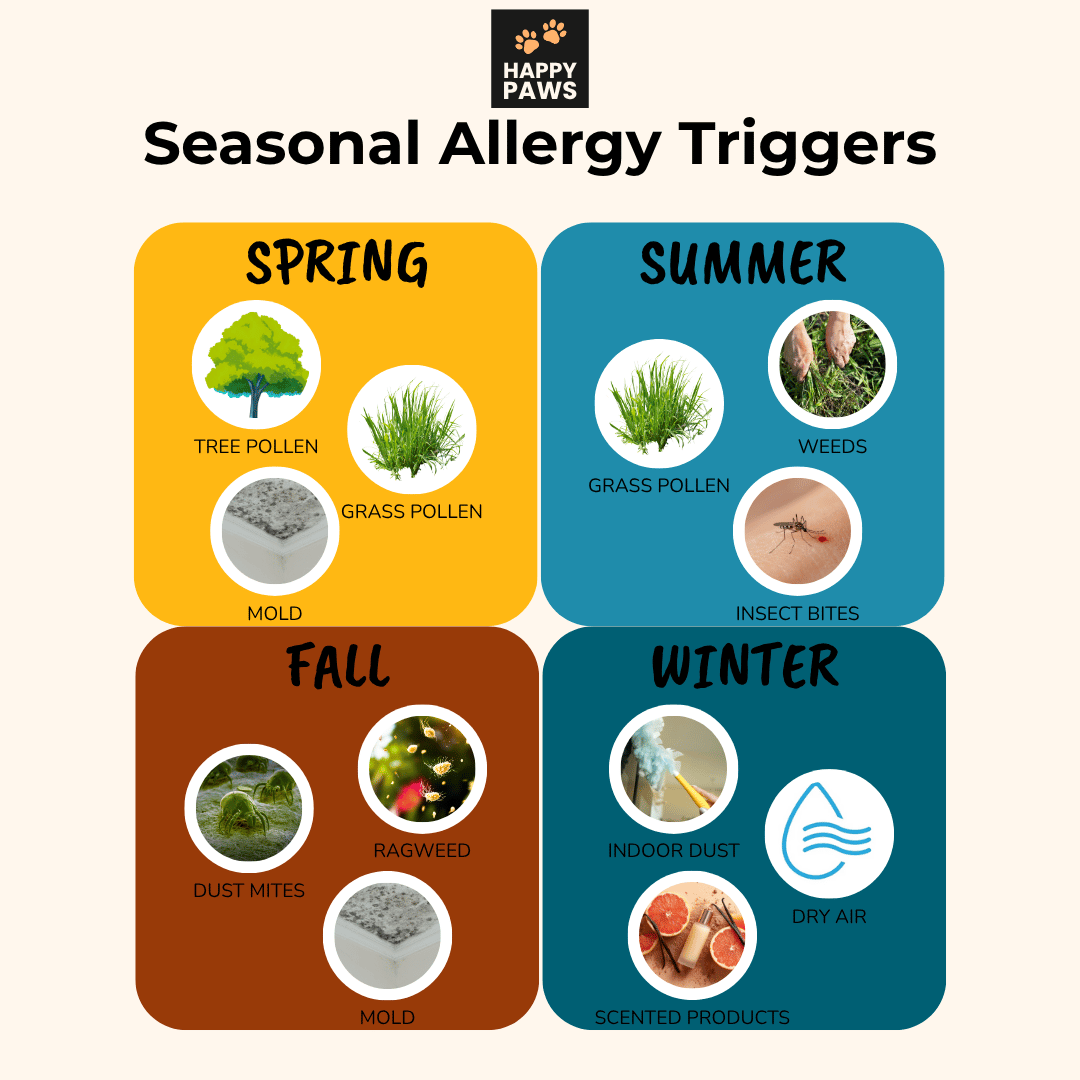
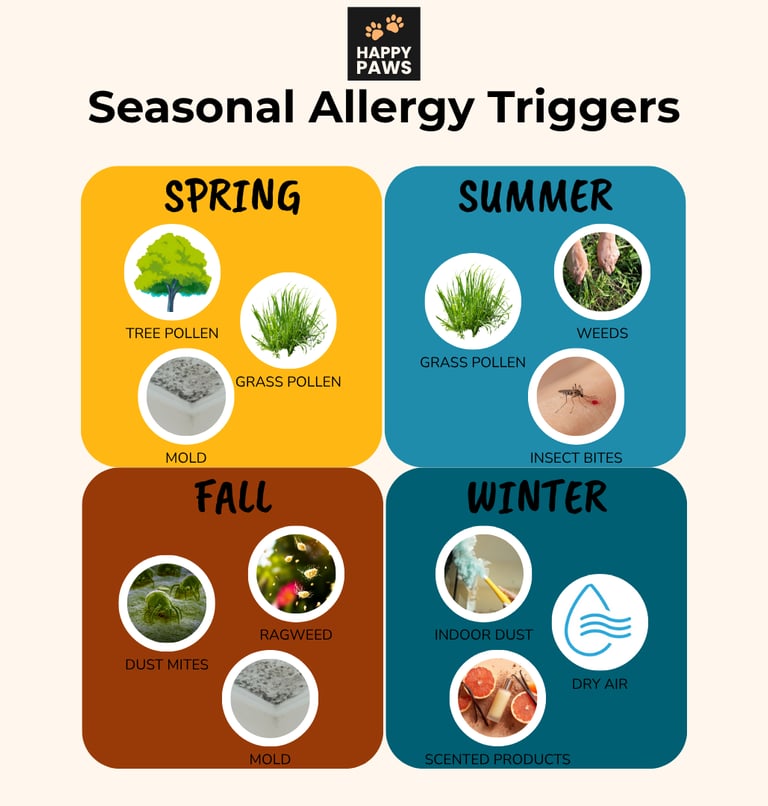
❗Pro Tip: Pets who spend a lot of time outside or go on frequent walks are more likely to pick up allergens on their paws and fur.
Here are some gentle and effective ways to manage symptoms at home:
🧼 Wipe Paws After Walks
Allergens cling to paws and fur. Use fragrance-free pet wipes or a damp cloth to wipe paws, belly, and fur after being outdoors — especially during peak pollen hours (early morning & evening).
🛁 Bathing Helps — But Not Too Often
Bathing can remove allergens and soothe itchy skin.
Choose:
-Hypoallergenic or oatmeal-based shampoos
-Medicated vet-recommended shampoo for recurring allergies
Avoid over-bathing, which can dry out the skin.
💨 Keep Indoor Air Clean
-Use an air purifier with a HEPA filter
-Vacuum more frequently during peak allergy season
-Wash pet bedding weekly with scent-free detergent
🧴Use Pet-Safe Balms or Sprays
-Paw balms create a barrier against allergens
-Anti-itch sprays can soothe flare-ups
Always confirm products are pet-safe and vet-approved.
🌱 Try Omega-3 Supplements
Omega-3 fatty acids support skin health and reduce inflammation.
Ask your vet about proper dosage based on your pet’s size.
Why It Matters for Pets
While mild allergies can often be managed at home, a vet visit is recommended if your pet shows:
Persistent itching or skin infections
Open sores or hot spots
Repeat ear infections
Sudden behavior changes due to discomfort
Vets may suggest:
Prescription allergy relief
Medicated shampoos
Allergy testing or immunotherapy
Diet adjustments for food sensitivities
🩺 When to See the Vet
If you’re unsure what’s causing symptoms, a vet can help identify the source.
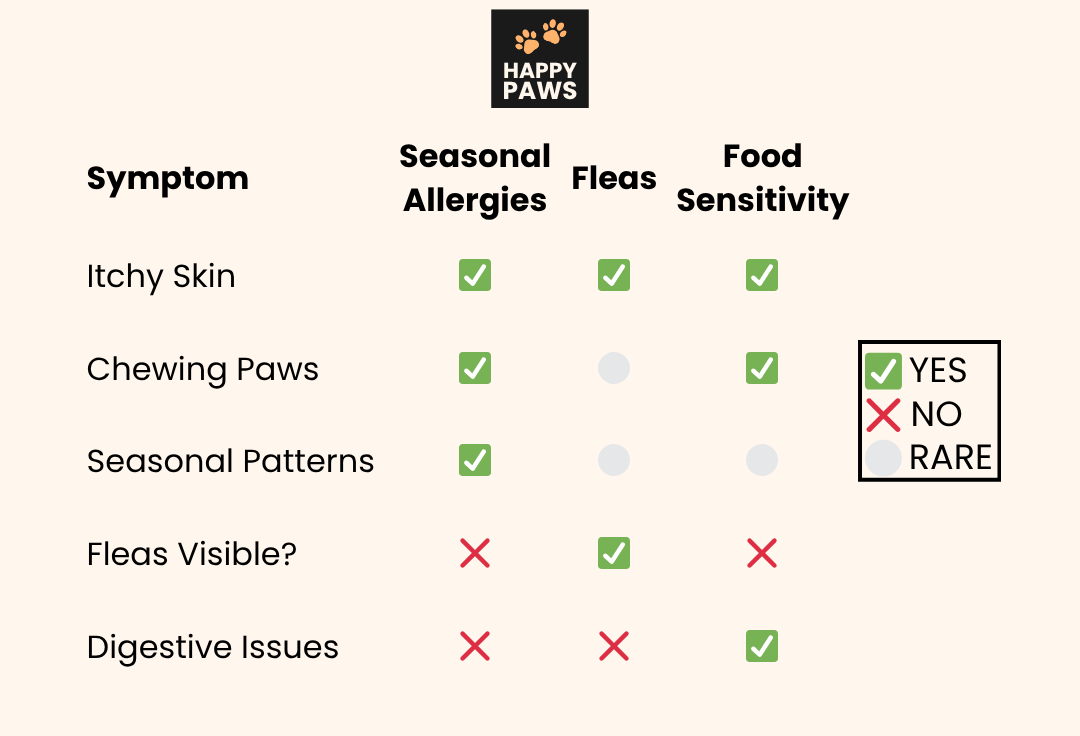
🧠 Allergies vs. Fleas vs. Food Sensitivity
When we care for pets with allergies, our team takes extra steps to keep them comfortable:
Wiping paws after walks
Avoiding freshly cut grass when possible
Using owner-approved wipes and products
Keeping a close eye on itching or skin flare-ups
Sharing detailed visit notes so you know how they’re doing
Our goal is always comfort, safety, and stress-free care — whether it’s a walk, drop-in, or vacation pet sitting.
🐾 What We Do at Happy Paws Burlington to Help Allergy-Prone Pets
Seasonal allergies are common — but with the right care, your pet can stay happy, healthy, and comfortable all year long. By observing symptoms early, minimizing exposure to allergens, and supporting skin and immune health, you’ll help ease their discomfort and prevent flare-ups.
You’re not alone in this — and if your pet needs allergy-aware care while you’re away, our Happy Paws team is here to help. 💛
📞 Book your next visit with Happy Paws today!
👉 Ready for Reliable Pet Care You Can Count On?
Get in touch
© 2026. All rights reserved.
Burlington, Oakville, and Milton, Ontario